
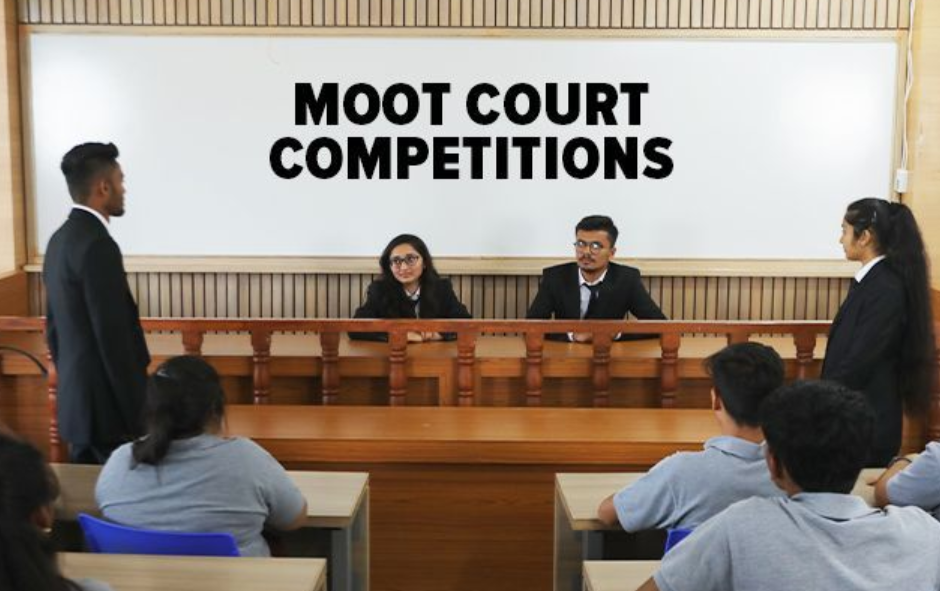
Moot Court Tips: Mastering Moot Propositions in Indian Law Colleges for Competitive Success
Introduction
Moot court competitions are an integral part of legal
education in India, offering law students a simulated courtroom experience.
These competitions help develop essential advocacy skills, legal research
capabilities, and the ability to argue persuasively before a panel of judges.
One of the most critical aspects of excelling in a moot
court is understanding and effectively dealing with a moot proposition. A moot
proposition forms the foundation of the entire competition, dictating the
arguments and legal reasoning that participants must present. Successfully
handling a moot proposition requires thorough research, strategic
argumentation, and sharp presentation skills.
In this guide, we will break down key strategies for
tackling a moot proposition, specifically focusing on Indian law colleges.
Whether you are a beginner or an experienced mooter, these tips will help you
navigate moot court competitions with confidence.
What is a Moot Proposition?
A moot proposition is a hypothetical legal problem presented
in a moot court competition. It is designed to simulate real-life legal
disputes and requires participants to argue from both sides—appellant and
respondent.
Structure of a Moot Proposition
A standard moot proposition typically includes:
- Facts
of the Case – Background information and events leading to the
dispute.
- Legal
Issues – The specific questions of law that need resolution.
- Jurisdiction
– Whether the case falls under Indian or international law.
- Statutes
and Precedents – Laws and previous judgments relevant to the case.
Understanding the moot proposition thoroughly is the first
step toward building a strong case.
Understanding the Facts and Issues
Before diving into legal research, it is crucial to analyze
the moot problem in detail.
Steps to Break Down a Moot Proposition
- Read
the Proposition Multiple Times – Ensure clarity on the facts and legal
issues.
- Identify
the Core Legal Questions – Distinguish between procedural and
substantive law issues.
- Determine
Jurisdiction – Identify whether the case is under Indian
constitutional law, criminal law, contract law, etc.
For example, if the moot problem involves constitutional
law, you must focus on Supreme Court precedents and relevant constitutional
provisions.
Researching Indian Legal Precedents
Legal research forms the backbone of any moot court
argument. Strong arguments are supported by authoritative case laws, statutes,
and legal principles.
Where to Conduct Legal Research?
- Online
Databases – Manupatra, SCC Online, Indian Kanoon
- Bare
Acts and Commentaries – Indian Constitution, IPC, CrPC, etc.
- Law
Journals and Articles – Harvard Law Review, NUJS Law Review
Tips for Effective Legal Research
- Use
keywords specific to your legal issue (e.g., "Article 21 right to
privacy India").
- Identify
binding precedents from Supreme Court rulings.
- Avoid
outdated or overruled judgments.
By gathering strong legal authorities, you strengthen your
case and enhance credibility before the judges.
Constructing a Strong Legal Argument
The IRAC Method
One of the best ways to structure legal arguments is the IRAC
method:
- Issue
– Clearly state the legal question.
- Rule
– Mention the relevant legal provision or precedent.
- Application
– Apply the law to the facts of the moot problem.
- Conclusion
– Summarize the argument and justify the position.
For instance, if the issue concerns Article 14 (Right to
Equality), your argument should:
- Define
the principle of equality.
- Cite
relevant Supreme Court judgments.
- Apply
the rulings to the given moot proposition.
By following this structured approach, you ensure that your
arguments remain logical and well-supported.
Drafting the Memorial
A memorial is a written submission outlining legal
arguments. It must be well-organized and meticulously formatted.
Key Sections in a Memorial
- Cover
Page
- Table
of Contents
- Statement
of Facts
- Legal
Issues Raised
- Summary
of Arguments
- Detailed
Arguments with Authorities
- Conclusion
and Prayer for Relief
Following the correct formatting style (such as Bluebook
or OSCOLA) enhances readability and professionalism.
Oral Advocacy Techniques
While written memorials are crucial, oral arguments define
your performance in a moot court competition. Confidence, clarity, and logical
reasoning play a key role in persuading the judges.
Essential Oral Advocacy Skills
- Confidence
and Composure – Speak with authority, even if challenged.
- Structured
Presentation – Follow a logical sequence: Introduction, Legal
Arguments, Conclusion.
- Engaging
Delivery – Use voice modulation to emphasize key points.
- Handling
Questions Gracefully – Be prepared for unexpected questions and
maintain composure.
- Eye
Contact and Posture – Maintain professionalism and engage with the
bench effectively.
For example, if a judge interrupts your argument with a
counter-question, acknowledge it respectfully, pause for a second to gather
your thoughts, and respond with clarity. Never appear defensive or dismissive.
Courtroom Etiquette and Body Language
Your body language can make or break your oral presentation.
Moot court judges observe not just what you say, but how you say it.
Best Practices for Courtroom Etiquette
- Dress
Professionally – Wear formal attire (black and white with a coat).
- Use
Respectful Language – Address judges as “Your Lordship” or “Your
Ladyship.”
- Stand
Firmly and Speak Clearly – Avoid unnecessary movements or fidgeting.
- Listen
Attentively – Do not interrupt the judges or opposing counsel.
Maintaining a professional demeanour helps create a positive
impression and adds credibility to your argument.
Anticipating Counterarguments and Rebuttals
Mooting isn’t just about presenting your arguments—it’s also
about responding to the opposing team’s contentions.
Strategies for Handling Rebuttals
- Predict
the Opposition’s Arguments – Prepare counterarguments for every
possible claim they might raise.
- Respond
With Legal Precision – Avoid emotional rebuttals and stick to legal
reasoning.
- Stay
Concise and Focused – Rebuttals should be short, sharp, and supported
by authorities.
- Use
Case Law to Your Advantage – Cite contradictory case laws to weaken
the opponent’s stance.
A well-executed rebuttal can turn the tide of the
competition in your favor.
Time Management During Mooting
Every moot court has strict time limits for oral arguments.
Managing time efficiently ensures you cover all crucial points without rushing.
Tips for Effective Time Management
- Allocate
Time for Each Section – Opening (2 min), Arguments (10 min), Rebuttals
(3 min).
- Practice
with a Timer – Simulate real-time conditions during preparation.
- Prioritize
Key Arguments – Focus on the most impactful legal points first.
- Avoid
Rambling – Be precise and to the point.
Many mooters make the mistake of spending too much time on
introductions, leaving less time for substantive arguments. Practicing under
timed conditions helps refine delivery.
Working as a Team in Moot Court
A moot court team typically consists of:
- Speaker
1 – Introduces the case and presents the first set of arguments.
- Speaker
2 – Continues the arguments and handles rebuttals.
- Researcher
– Provides case law references and assists speakers.
How to
Build a Strong Team Dynamic?
- Assign
Clear Roles – Each member should know their specific responsibilities.
- Coordinate
Argument Flow – Ensure consistency between Speaker 1 and Speaker 2.
- Conduct
Mock Sessions – Practice together to refine strategy and teamwork.
- Support
Each Other – If one team member struggles, the others should assist
seamlessly.
A well-coordinated team can enhance overall performance and
leave a lasting impression on the judges.
Common Challenges Faced in Mooting
Despite rigorous preparation, mooters often encounter
unexpected difficulties.
Some Common Challenges and Solutions
|
Challenge |
Solution |
|
Judges Ask Difficult Questions |
Stay calm, take a deep breath, and answer logically. |
|
Lack of Case Law on an Issue |
Use persuasive arguments and analogies from related cases. |
|
Opposing Counsel is More Experienced |
Focus on your strengths and present arguments
convincingly. |
|
Stage Fright and Nervousness |
Practice in front of a mirror or record yourself speaking. |
Being adaptable and thinking on your feet are crucial skills
in mooting.
Importance of Post-Moot Analysis
Your learning doesn’t stop after the moot competition.
Post-moot analysis helps improve your skills for future competitions.
How to Assess Your Performance?
- Review
Judges’ Feedback – Identify strengths and areas for improvement.
- Analyze
Opponent’s Arguments – Learn from their strategies.
- Self-Reflection
– Ask yourself: What could I have done better?
Taking notes on feedback and refining your approach will
help you grow as a mooter.
Resources for Moot Court Preparation
For law students serious about excelling in moot courts, the
following resources are invaluable:
Books on Mooting
- Moot
Courts: A Student Guide – John Snape
- How
to Moot: A Student Guide to Mooting – John Sprack
Online Legal Research Platforms
- Manupatra
(www.manupatra.com)
- SCC
Online (www.scconline.com)
- Indian
Kanoon (www.indiankanoon.org)
Workshops and Webinars
- Moot
Court Training by Bar Council of India
- NLIU
and NALSAR Moot Court Workshops
Engaging with these resources will refine your mooting
skills and prepare you for high-level competitions.
Conclusion
Moot courts are an invaluable experience for law students in
India, offering a glimpse into real-world legal practice. Handling a moot
proposition effectively requires meticulous research, structured arguments,
confident oral advocacy, and teamwork.
By following the tips outlined in this guide—understanding
the moot problem, developing strong arguments, refining presentation skills,
and analysing post-moot feedback—you can significantly improve your performance
in competitions.
Remember, mooting is a continuous learning process. Every
competition, whether you win or lose, adds to your growth as a legal
professional. Stay persistent, practice rigorously, and embrace the challenge
of advocacy.
Happy Mooting!
FAQs
1. How do I start preparing for a moot court competition
in India?
Start by thoroughly reading the moot proposition,
identifying key legal issues, and researching relevant case laws. Work on both
written submissions (memorials) and oral presentations.
2. What are the best legal databases for Indian law
students to use for mooting?
Some of the best legal research platforms include Manupatra,
SCC Online, and Indian Kanoon. These provide access to case laws, statutes, and
legal commentaries.
3. How do I handle difficult questions from moot court
judges?
Stay calm, listen carefully, and respond logically. If
unsure, acknowledge the question, provide a reasoned assumption, and transition
back to your core arguments.
4. What are the common mistakes to avoid in a moot court
competition?
Avoid poor time management, unstructured arguments, lack of
legal backing, and overconfidence. Also, ensure professional courtroom
etiquette at all times.
5. Can I participate in a moot court competition as a
first-year law student?
Yes! Many moot court competitions are open to first-year
students. While challenging, early participation helps develop advocacy skills
from the start of your legal education.